Buyer guide
Alaska Cold and Gravel Highways: What to Buy for the Last Frontier
Block heaters, remote start, 4x4, spare tires and fuel range for Fairbanks winters and the Dalton and Denali highways, across Ram, Jeep and Dodge models.
By the Northwest CDJR editorsUpdated November 6, 20266 min read
Alaska asks different questions of a vehicle than the other states in this region. A Seattle buyer worries about rain and hills. An Alaskan buyer worries about whether the engine will turn over at twenty or thirty below, whether a rock will crack the windshield on the Dalton, and how many miles lie between the last pump and the next one.
This guide covers the cold-weather and gravel-road features that matter, using the manufacturers' published specs and option prices for the 2027 model year. Prices are before destination and will change. Road conditions, seasonal closures and construction on the Parks, Glenn, Dalton and Denali highways are managed by the state, so check Alaska 511 and the Alaska DOT&PF before you go.
Cold Starts: Block Heaters and Remote Start
A block heater keeps the engine warm enough to start easily and reach cabin heat sooner when the temperature falls well below zero, which it can in Fairbanks during a hard winter. Many Interior Alaska owners plug in at home, at work and at motels.
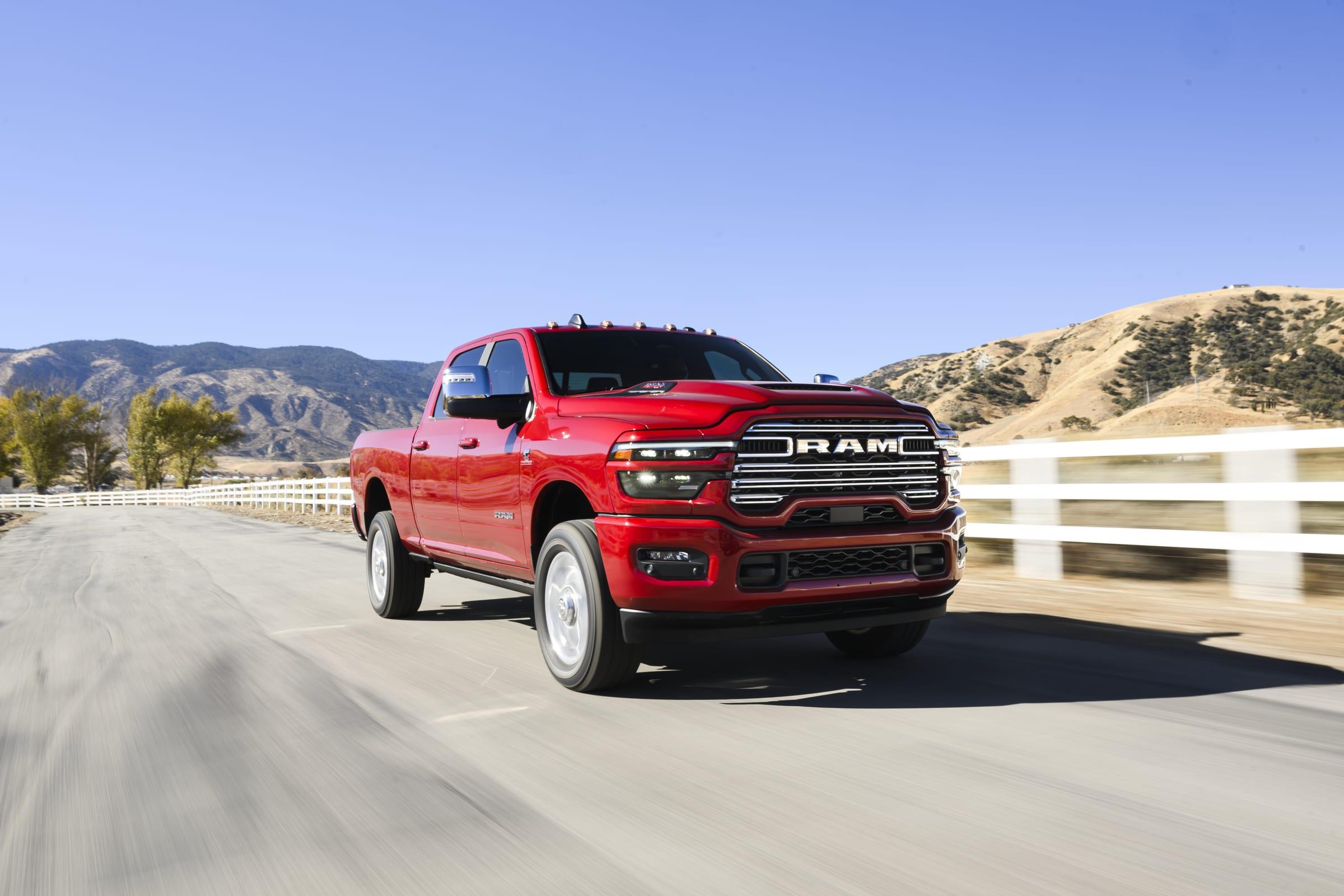
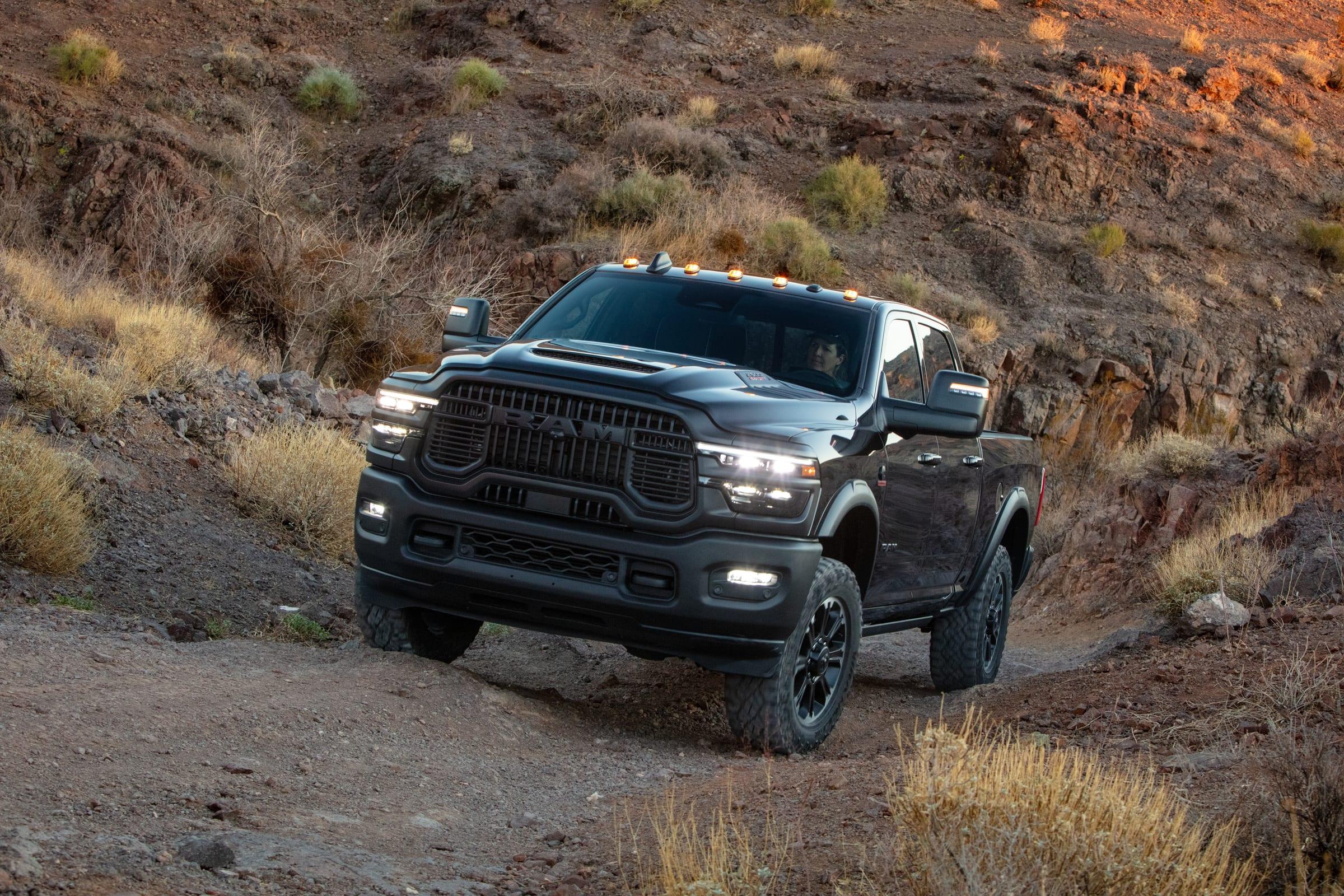
Ram makes this easy on the 2500. Its Cold Weather Group costs $245 on most trims and adds an engine block heater and a Mopar winter front grille cover. That is cheap insurance on either the 6.4‑liter HEMI V8 or the 6.7‑liter Cummins High‑Output diesel, which Ram prices at $12,495 as an option on Tradesman and Big Horn. Ram's 1500 option list does not show a comparable block-heater group, so ask a dealer what can be installed there before you order.
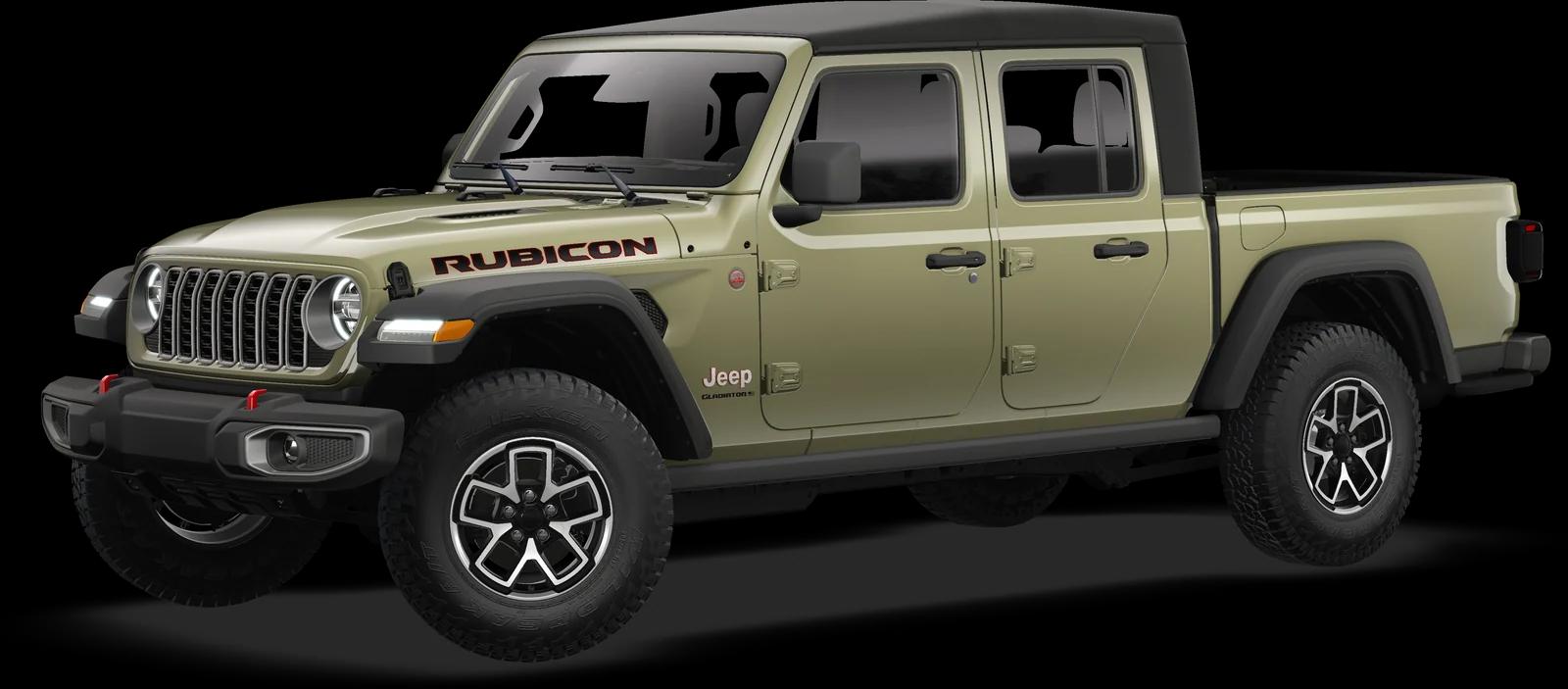
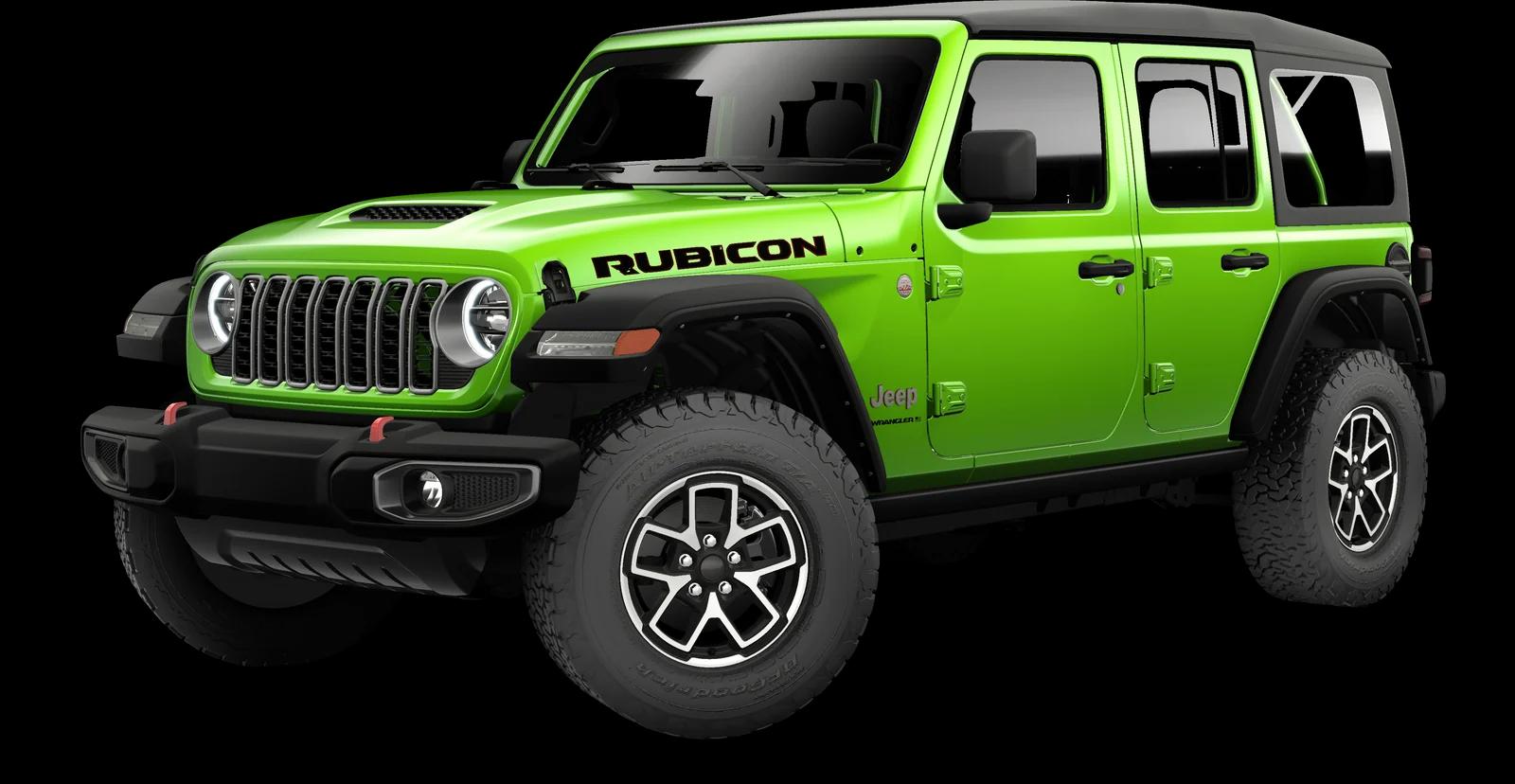
Remote start lets you warm the cabin before you walk out. The Ram 2500 Big Horn includes it in the Level 1 Plus Equipment Group ($2,785). On the Jeep side, the Wrangler Convenience Group ($1,595 on Sport S and Willys, $195 on Rubicon) adds remote start, and the Sahara has it standard. The Gladiator Convenience Group ($1,795 on Sport S, $1,595 on Willys, $195 on Rubicon and Mojave) bundles remote start with heated front seats and a heated steering wheel, which is the better value of the two.
Four‑Wheel Drive Choices
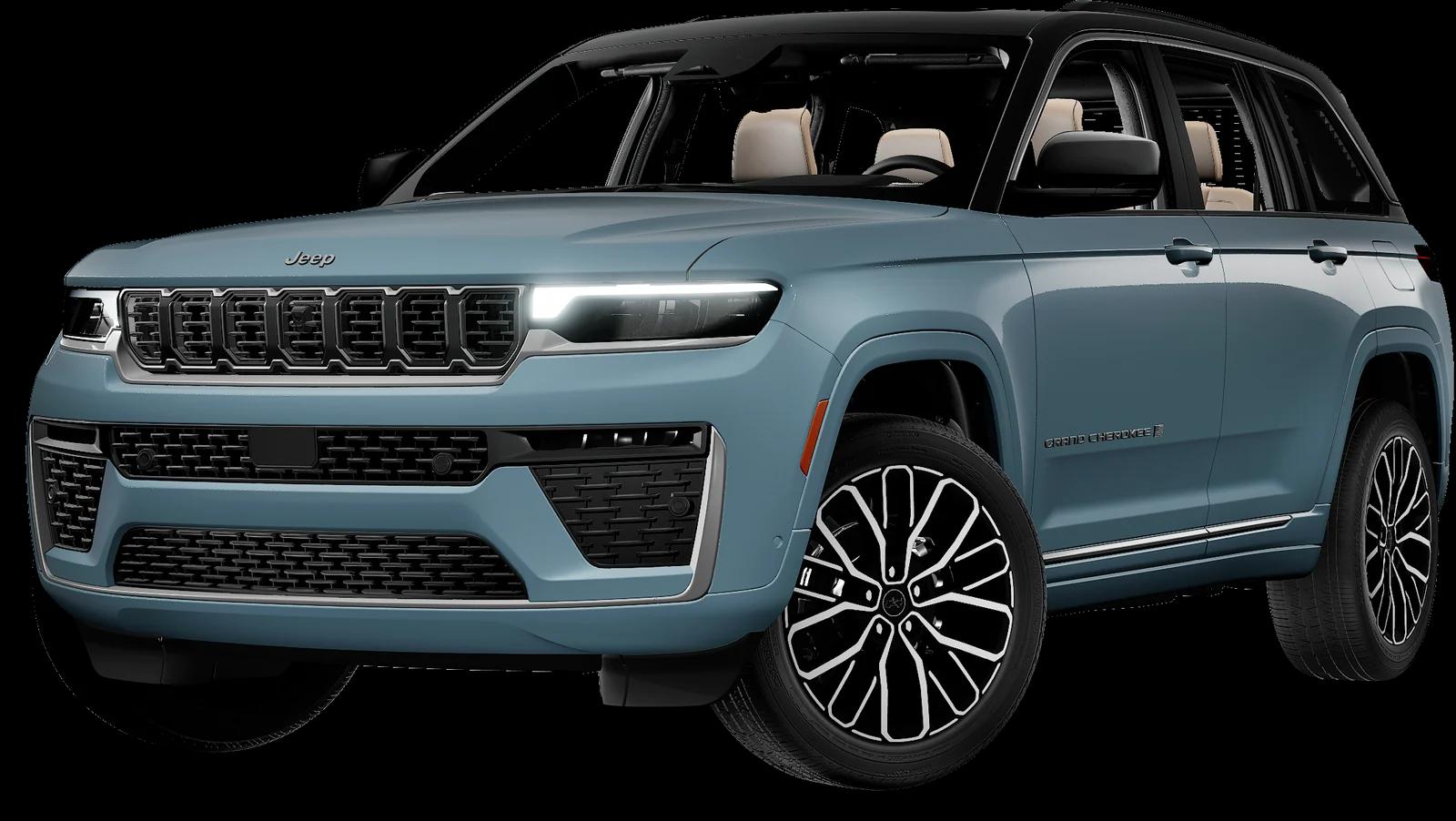
Snow, ice and gravel all reward traction. The Gladiator and Wrangler have four-wheel drive standard on every trim. The Ram 1500 and 2500 come in 4x2 or 4x4, so for Alaska you want the 4x4. The Durango has all-wheel drive standard on every trim. The Grand Cherokee offers 4WD as an option on Laredo and Limited trims, and makes it standard on Limited Reserve, Summit and Trailhawk.
For packed snow and icy pavement, a part-time system like Command-Trac or a full-time system like Selec‑Trac both work, provided you know which mode to use. The Ram 1500 Laramie lists five drive modes including Tow and Snow on 4x4 models, and the Durango's Tow 'n Go Package adds Sport, Track, Tow and Snow modes. Tires matter as much as drivetrain, so budget for a proper winter set.
Gravel Highways: Clearance, Spares and Protection
The Dalton Highway runs about 414 miles from the Elliott Highway north of Fairbanks to Deadhorse, and the Denali Highway covers roughly 135 miles between Cantwell and Paxson, mostly on gravel. Both put stones, dust and washboard under your vehicle, and heavy truck traffic on the Dalton throws more rocks than a quiet road would.
Ground clearance helps, though it is not the whole story. The Wrangler offers 9.7 inches on a Sport up to 12.9 inches on a four-door Rubicon with LT315 tires. The Gladiator ranges from 10 inches to 12.9 inches with the 35‑inch tire package. The Ram 2500 runs about 11.1 inches on a Crew Cab 4x2 up to 14.2 inches on a Power Wagon with the HEMI. The Grand Cherokee has 8.4 inches on standard suspension and up to 11.4 inches on a Trailhawk with air suspension. The Durango sits at 7.8 to 8.0 inches, and the Ram 1500 with air suspension ranges from 6.7 inches in entry mode to 10.7 inches in Off Road 2.
A full-size spare is worth more than clearance on a remote road. Ram's 1500 Off‑Road Group, priced from $1,345 to $1,895 depending on trim, lists a full-size spare tire along with skid plates and an electronic-locking rear axle. The Grand Cherokee's $995 Trailer-Tow Package also includes a full-size spare. On a Wrangler or Gladiator, confirm the spare matches the size of the tires you plan to run, especially if you add the 35‑inch package.
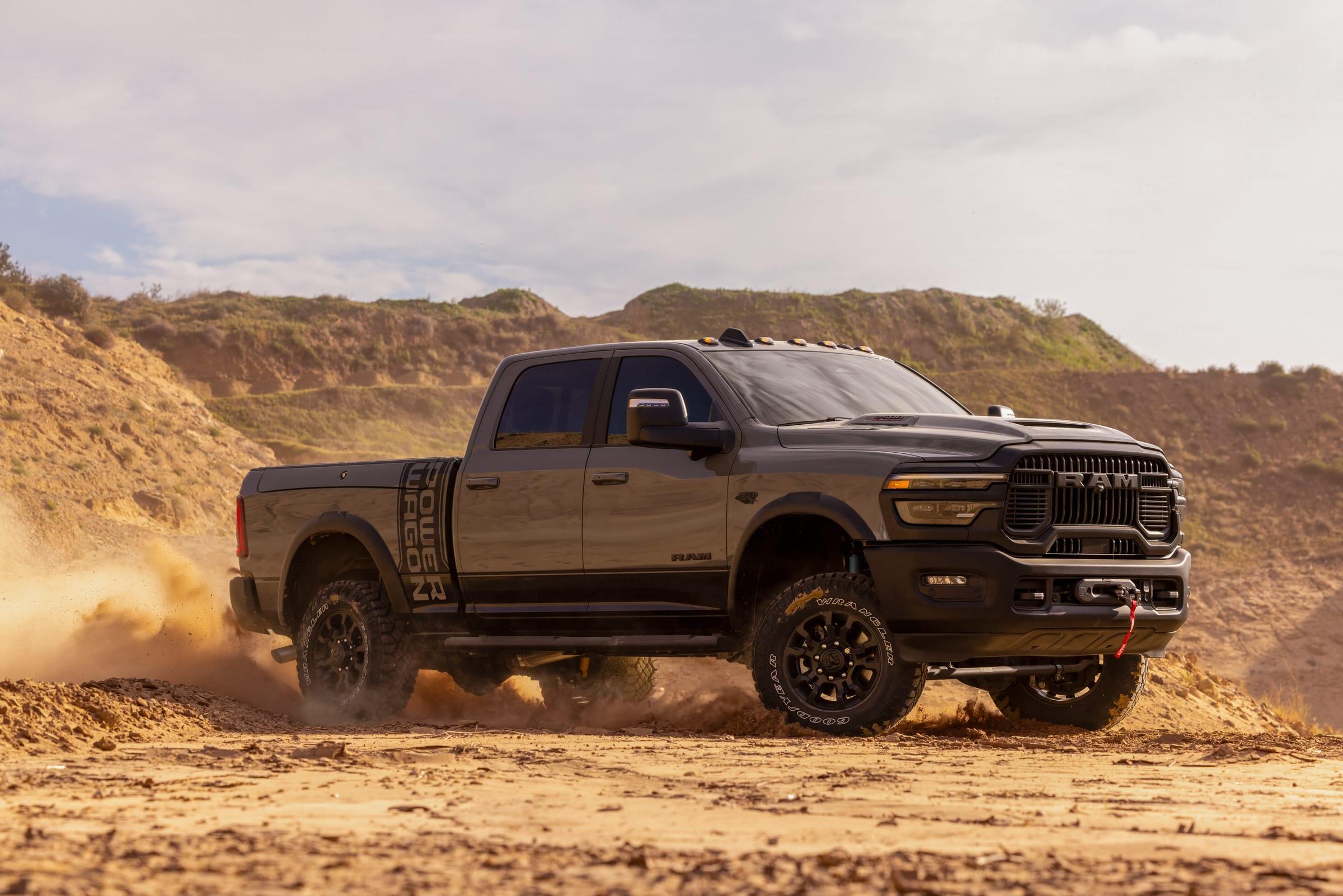
Underbody protection costs less than a transmission case. Ram's Protection Group ($495 on Tradesman, Big Horn and Laramie) adds fuel tank, steering gear and transfer case skid plates plus tow hooks. For recovery, Ram's Power Wagon Package for the 2500 is $7,995 and includes a winch, and Jeep's Mojave Steel Bumper Group ($1,995) provides a winch-capable front bumper.
Windshields, Headlights and Wipers
Gravel roads and ice-melting chemicals are hard on glass and lenses. In general terms, keep a long gap behind trucks, slow down when meeting oncoming traffic on gravel, and ask about clear protective film for the headlights and paint. Mud flaps cut down on stone chips for you and for the vehicles behind.
Some Jeeps include relevant equipment. The Gladiator's Convenience Group lists a Corning Gorilla Glass windshield. The Grand Cherokee Summit's Advanced ProTech Group IV ($495) includes a windshield wiper de-icer. Heated mirrors and a heated steering wheel appear on many trims, and Ram 2500 Big Horn buyers can add a Heated Steering Wheel and Seats Group for $445. If a trim you like lacks a feature, ask what accessories are available through Mopar or a local shop.
Fuel Range Across the Long Gaps
Some stretches in Alaska have no fuel for a couple of hundred miles. The Dalton, for example, has about 240 miles between Coldfoot and Deadhorse. That is a rough distance, so check current services with a travel guide or Alaska DOT&PF before you commit. Fill up at every opportunity.
The table shows a rough estimate, worked out by multiplying tank size by EPA highway mpg. It will be lower on gravel, in deep cold, with a camper or with studded tires.
| Vehicle | Fuel tank | EPA highway mpg | Rough range (estimate) |
|---|---|---|---|
| Ram 1500, 3.6L V6 eTorque 4x4 | 26 gal (33 gal optional) | 24 | About 624 miles (about 792 with 33 gal) |
| Jeep Grand Cherokee, 3.6L V6 | 23 gal | 26 | About 598 miles |
| Dodge Durango GT AWD HEMI V8 | 24.6 gal | 22 | About 541 miles |
| Jeep Gladiator | 22 gal | 22 | About 484 miles |
| Jeep Wrangler four-door, 2.0L turbo | 21.5 gal | 22 | About 473 miles |
Ram does not publish EPA ratings for the 2500, since heavy-duty trucks above 8,500 pounds GVWR do not carry them. The diesel Power Wagon lists a 31‑gallon tank. Without an official mileage figure, track your own fuel use over a few tanks before you rely on it for a remote run.
What About Electric Vehicles?
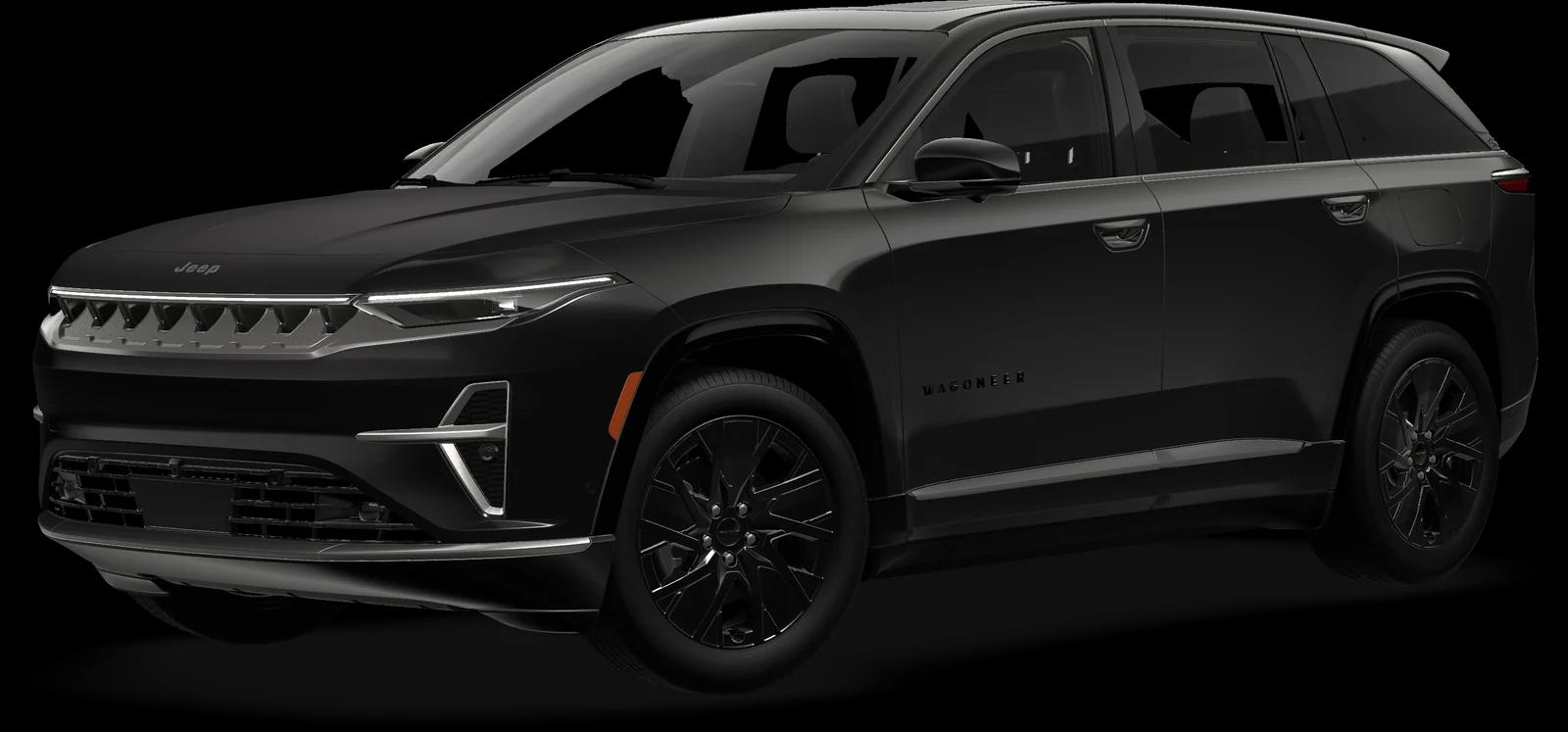
Cold weather affects batteries. The Jeep Wagoneer S is rated at 294 miles from its 100.5-kWh battery, and that figure will drop in cold weather, at high speeds or when towing. In very low temperatures, an electric vehicle needs energy for cabin heat and battery conditioning on top of driving, and charging itself can take longer when the battery is cold.
That matters on the Parks Highway, about 360 miles from Anchorage to Fairbanks, where fast chargers are far apart. An EV can work well for local driving around Anchorage, Fairbanks or the Mat‑Su Valley, especially with home charging and a plugged-in garage. For the Dalton or the Denali Highway, a gas or diesel truck is the safer choice. Check charger maps and current conditions before any long EV trip.
Putting It Together
For serious Interior winters and remote travel, the Ram 2500 with the Cold Weather Group is the most direct answer, with a block heater for $245 and capacity to spare. The Ram 1500 4x4 suits a family or work truck that drives the Parks and Glenn highways daily. The Grand Cherokee, Durango, Wrangler and Gladiator each cover the ground in different ways: comfort, three rows, trail clearance and open-air flexibility.